


2x4 led flat panel light with emergency battery backup
Nov 04, 2025
Leave a message

Do 2x4 LED Flat Panel Lights Include Battery Backup?
Standard 2x4 LED flat panel lights do not include battery backup. Most models sold are basic fixtures that operate only when connected to building power. However, manufacturers offer specific versions with integrated emergency battery backup systems that automatically activate during power outages.
Understanding the Two Product Categories
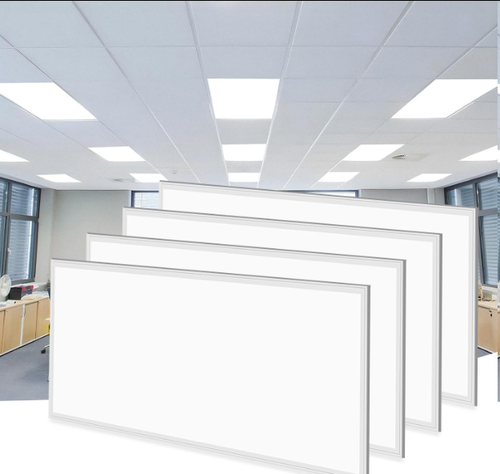
The 2x4 LED panel market splits into two distinct categories. Standard panels provide everyday illumination for offices, schools, and commercial spaces. These fixtures connect directly to your electrical system and go dark when power fails.
Emergency battery backup models look nearly identical but contain additional components. A lithium-ion or nickel-cadmium battery pack sits inside the fixture housing, along with a charging circuit and automatic switching mechanism. When AC power drops, the system detects the loss within seconds and switches to battery power.
The physical difference is minimal. Emergency models typically include a small indicator light on the fixture face showing battery status-green for charged, red for charging, and sometimes amber for maintenance alerts. A test button allows monthly compliance checks required by building codes.
Why Most Panels Don't Include Battery Backup
Cost drives this separation. A standard 2x4 LED panel retails between $40-$80 depending on wattage and features. Adding emergency battery backup increases the price to $120-$200 per fixture. For a building with 100 ceiling panels, that's a $4,000-$12,000 difference.
Building codes don't require emergency lighting everywhere. NFPA 101 mandates battery backup only along egress paths-hallways, stairwells, corridors leading to exits, and the exits themselves. Storage rooms, private offices, and many work areas don't need emergency illumination. Installing backup batteries in every fixture wastes money.
Weight and installation complexity also factor in. Emergency models weigh 2-4 pounds more than standard panels due to the battery pack. The additional wiring connections for the emergency circuit add installation time. Electricians need to properly configure the switching mechanism so the fixture operates normally during regular use but switches to emergency mode during outages.
How Emergency Battery Backup Systems Work
The technology is straightforward but clever. During normal operation, building power runs the LED panel at full brightness while simultaneously charging the internal battery. A trickle charge maintains the battery at full capacity, typically requiring 24 hours for a complete charge cycle after depletion.
When power fails, a relay instantly detects the voltage drop. Within 10 seconds-the maximum delay allowed by code-the system switches to battery power. The fixture continues operating, though often at reduced output. A 40-watt panel might drop to 8-20 watts in emergency mode, providing enough light for safe navigation without draining the battery too quickly.
Modern systems use lithium-ion batteries rated at 14.8V with 2,500-3,000 mAh capacity. These batteries deliver 90 minutes of emergency illumination, meeting the minimum NFPA 101 requirement. Premium models extend this to 120 minutes, providing an extra safety margin. The battery management system prevents over-discharge, which would damage the cells and reduce lifespan.
Once power restores, the fixture automatically switches back to normal operation and begins recharging the battery. The entire process requires no human intervention.
Code Requirements That Drive Emergency Lighting Decisions
NFPA 101 Life Safety Code establishes the baseline. Emergency lighting must provide at least 1 foot-candle of illumination along egress paths at floor level when first activated. After 90 minutes, the light level can decline to 0.6 foot-candles but must never drop below 0.1 foot-candle at any point.
The International Building Code (IBC) and local jurisdictions add their own requirements. Some cities mandate emergency lighting in specific occupancy types. Healthcare facilities face stricter rules than office buildings. Schools have different requirements than warehouses.
Monthly testing is mandatory. Someone must press the test button on each emergency fixture and verify it illuminates. Annual testing requires a full 90-minute discharge test to confirm the battery maintains adequate charge. These tests must be documented, and inspectors can request the logs during building reviews.
Failure to comply carries consequences. Buildings can fail occupancy inspections. Insurance companies may deny claims if emergency lighting wasn't properly maintained. In worst cases, violations that contribute to injuries during emergencies can result in penalties up to $250,000.
Comparing Battery Backup Options
Three battery chemistries dominate the emergency lighting market, each with distinct characteristics.
Lithium-ion batteries offer the best power-to-weight ratio. A typical 14.8V Li-ion pack weighs under 1 pound but delivers 90-120 minutes of runtime. These batteries handle 500-1,000 charge cycles before capacity degrades significantly. Temperature tolerance is good, operating reliably from 32°F to 104°F. The main drawback is cost-Li-ion packs run 30-40% more expensive than alternatives.
Nickel-cadmium (NiCd) batteries represent the traditional choice. They're extremely reliable, handling 1,500-2,000 charge cycles and operating in temperatures from -4°F to 122°F. NiCd batteries tolerate abuse better than other chemistries, making them ideal for harsh environments. However, they're heavier, contain toxic cadmium, and suffer from memory effect if not fully discharged periodically.
Nickel-metal hydride (NiMH) batteries split the difference. They offer twice the capacity of NiCd in the same size, are environmentally friendlier, and avoid memory effect issues. The tradeoff is shorter lifespan-typically 500-800 cycles-and slightly higher cost than NiCd.
Most manufacturers now default to lithium-ion for new installations. The longer lifespan and lighter weight offset the higher initial cost over the fixture's 10-15 year service life.

Pre-Installed vs. Retrofit Emergency Backup
If you're installing new fixtures, pre-installed emergency backup is the clear choice. The manufacturer integrates all components at the factory, tests the system, and provides a single warranty covering the entire fixture. Installation is identical to a standard panel-mount it in the drop ceiling grid and connect the wiring.
Retrofit kits exist for adding emergency backup to existing LED panels, but they're problematic. The kit includes a separate battery pack that mounts externally, usually on top of the fixture above the ceiling tiles. You need to wire it into the panel's driver circuit, which may void the fixture warranty. The battery pack sits in a hot ceiling plenum, reducing battery life. Installation takes 2-3 times longer than a pre-installed unit.
Retrofit kits make sense only in specific scenarios-when you have relatively new fixtures and need to add emergency capability to meet changing code requirements, or when budget constraints prevent replacing fixtures entirely. Otherwise, the labor cost and reliability concerns make pre-installed models the better investment.
Selecting the Right Emergency Panel for Your Application
Start with runtime requirements. Standard 90-minute batteries satisfy most building codes, but some jurisdictions or building types require longer duration. Hospitals, high-rise buildings, and facilities with mobility-impaired occupants often need 120-minute systems. Verify your local requirements before purchasing.
Wattage selection matters more than you might think. Many emergency panels offer selectable wattage-30W, 40W, or 50W-adjustable via a switch on the driver. This flexibility lets you match light output to ceiling height and room size. A 10-foot ceiling in a hallway might need only 30W, while a 14-foot ceiling in a lobby requires 50W. The emergency battery backup operates at a fixed wattage regardless of your normal operation setting, typically 8-20W.
Color temperature affects visibility during emergencies. Most panels offer selectable CCT (correlated color temperature) between 3500K, 4000K, and 5000K. For emergency egress lighting, 4000K or 5000K provides better visibility and alertness compared to warmer 3500K light. The cooler tones help people navigate more effectively during stressful situations.
Dimming capability adds flexibility but check compatibility. Many emergency panels support 0-10V dimming during normal operation, letting you reduce light levels and save energy. The emergency circuit bypasses the dimmer, always operating at full emergency output when activated. Verify that your building management system can accommodate fixtures that ignore dimming commands during power failures.
Installation and Maintenance Considerations
Emergency LED panels install like standard fixtures with one critical difference-the battery needs proper charging time before the first use. After installation, leave the fixture powered for 24 hours to fully charge the battery. Some installers skip this step, leading to failed inspections when the fixture doesn't meet the 90-minute runtime requirement.
Placement requires thought. Emergency panels must illuminate the floor along egress paths, not just provide general room lighting. Position fixtures to eliminate dark spots where people might trip or miss directional signage. The maximum-to-minimum illumination ratio can't exceed 40:1, meaning you can't have bright pools of light next to dark shadows.
Battery replacement becomes necessary after 5-7 years for lithium-ion, 7-10 years for NiCd. Most manufacturers design panels with accessible battery compartments-remove a cover plate, disconnect the old battery, and plug in a replacement. Budget $30-$60 per battery plus labor. Some facilities prefer replacing the entire fixture after 10 years rather than maintaining aging emergency systems.
Testing protocols must be established and documented. Assign someone to perform monthly 30-second tests on all emergency fixtures. Schedule annual 90-minute discharge tests, ideally during off-hours since the fixtures will be unavailable during the test period. Keep detailed logs with dates, fixture locations, test results, and any maintenance performed. These records prove compliance during inspections.
Cost Analysis: Standard vs. Emergency Backup Panels
A standard 2x4 LED panel with selectable wattage (30W/40W/50W) and color temperature costs $45-$75. The same fixture with integrated emergency battery backup runs $120-$180. For a typical installation requiring 20 emergency egress fixtures, you're looking at $1,500-$2,600 additional cost compared to standard panels.
Installation labor is nearly identical. An experienced electrician installs either type in 20-30 minutes, including mounting, wiring, and testing. The emergency models require that initial 24-hour charge period, but this doesn't add labor cost-just calendar time before final inspection.
Maintenance costs differ significantly. Standard panels require virtually no maintenance beyond occasional cleaning. Emergency panels need monthly testing (5 minutes per fixture annually = 1.7 hours for 20 fixtures) and annual 90-minute discharge tests (30 hours total for 20 fixtures). At $75/hour for electrical contractor rates, that's $2,400 annually in testing labor.
Battery replacement hits every 5-7 years. At $40 per battery plus 15 minutes labor per fixture, replacing batteries in 20 fixtures costs roughly $1,200. Spread over the fixture's lifespan, emergency panels cost about $3,000-$4,000 more than standard panels when you factor in purchase price, testing, and battery replacement.
This cost is unavoidable for code-required egress lighting. The key is installing emergency backup only where mandated, using standard panels everywhere else.
Common Misconceptions About Emergency Lighting
Many building owners assume all ceiling fixtures need emergency backup. This misunderstanding leads to overspending. Only egress paths require emergency illumination-the routes people take to exit the building. Conference rooms, private offices, and work areas typically don't need battery backup unless they're along an exit route.
Another misconception is that emergency fixtures provide full brightness during outages. Most systems operate at 20-40% of normal output in emergency mode to extend battery life. This reduced output still meets code requirements for safe egress but won't support normal work activities. Don't expect to continue business operations during a power failure using emergency lighting alone.
Some people believe emergency panels require separate wiring circuits. They don't. Emergency panels connect to standard building power just like regular fixtures. The emergency function is entirely self-contained within the fixture. You're not creating a separate emergency electrical system-you're installing fixtures with built-in backup capability.
The idea that all emergency batteries are the same causes problems. Battery chemistry, capacity, and quality vary significantly between manufacturers. Cheap emergency panels might use undersized batteries that barely meet the 90-minute requirement when new and fail prematurely. Reputable manufacturers use quality battery cells rated for the full service life with adequate capacity margin.
Making the Purchase Decision
Start by identifying which fixtures actually need emergency backup. Walk your building's egress routes with a floor plan. Mark every hallway, corridor, stairwell, and exit path. Count the fixtures along these routes-those need emergency backup. Everything else can be standard panels.
Get quotes from multiple suppliers. Prices vary significantly between brands for similar specifications. A 40W 2x4 panel with 90-minute battery backup ranges from $120 to $200 depending on manufacturer, battery type, and features. Don't automatically choose the cheapest option-verify the battery capacity, warranty terms, and manufacturer reputation.
Check warranty coverage carefully. Standard LED panels typically carry 5-year warranties. Emergency panels should offer the same warranty on the LED components, but battery warranties are often shorter-2-3 years is common. Some manufacturers offer extended warranties for an additional cost.
Consider buying a few extra fixtures as spares. If an emergency panel fails, you need immediate replacement to maintain code compliance. Having spares on hand prevents delays waiting for shipping and keeps your building inspection-ready.
Frequently Asked Questions
Can I add emergency battery backup to my existing 2x4 LED panels?
Yes, retrofit kits are available, but they're not ideal. The battery pack mounts externally above the ceiling, requires additional wiring into the fixture's driver circuit, and may void your warranty. Installation takes 2-3 times longer than pre-installed units. Retrofit kits work best when you have relatively new fixtures and changing codes require emergency capability, but for most situations, replacing with pre-installed emergency panels is more reliable and cost-effective.
How long do emergency batteries last before replacement?
Lithium-ion batteries typically last 5-7 years before capacity degrades below acceptable levels. Nickel-cadmium batteries extend to 7-10 years. Actual lifespan depends on usage frequency, ambient temperature, and maintenance quality. Monthly testing and proper charging cycles help maximize battery life. Budget for replacement at the lower end of these ranges to avoid compliance issues.
Do emergency LED panels use more electricity than standard panels?
During normal operation, emergency panels consume slightly more power-typically 2-5 watts additional-to maintain the battery charge. For a fixture running 12 hours daily, this adds roughly $2-$4 annually to operating costs at average electricity rates. The difference is negligible compared to the compliance value and safety benefits.
What happens if I don't test my emergency lighting monthly?
You risk code violations and failed inspections. More importantly, untested emergency fixtures may not function during actual power outages. Batteries can fail, connections can corrode, and LED arrays can malfunction. Monthly testing catches these issues before emergencies occur. Building inspectors can request test logs, and missing documentation can result in citations or failed occupancy permits.
The bottom line: 2x4 LED flat panel lights don't automatically include battery backup. You must specifically purchase models with integrated emergency systems, install them along egress paths, and maintain them according to code requirements. Standard panels work fine for general lighting areas that don't require emergency illumination.
Send Inquiry