


How to build a led flood light
Aug 22, 2025
Leave a message
Learning how to build a led flood light lets people control how it works. They can also make it last longer and use less energy. Picking good parts and following the right steps helps led flood lights work in hard places. It also makes sure they give steady light. Many builders have problems like using the wrong fixtures or bad wiring. Some use cheap parts, which makes the flood light not last long or work well.
Common mistakes include:
- Using lamps that are not made for closed or outdoor fixtures.
- Mounting or wiring the light the wrong way.
- Picking cheap fixtures that break fast.
- Not checking if it works with emergency systems.
If you are choosing between fixed and portable flood lights, think about the beam angle, how high you put it, how strong it is, and if you need to move it. A strong flood light that is waterproof and shockproof is good for outside. Portable ones are easy to use for events or emergencies. Putting safety first and making smart choices helps you save money and makes your led flood light project last longer.
Materials & Tools
To make a good led flood light, you need the right materials and tools. Every part is important for how well it works, how safe it is, and how long it lasts. If you use strong parts, your flood light can work in tough places and give steady light.
LED Chips & Modules
Picking the best led chips or modules changes how bright, efficient, and costly your flood light will be. Driverless AC led chips plug right into the power, so they are easier and cheaper to use. Regular modules with drivers let you dim the light and use different voltages. The table below shows some common choices:
|
LED Chip/Module Type |
Power Range |
Price Range (USD) |
Features/Notes |
|---|---|---|---|
|
Basic COB LED Chips |
1W to 3W |
$0.98 to $5.99 |
High brightness, low power use |
|
Mid-power COB LED Chips |
3W to 10W |
$3.99 to $8.99 |
Needs heat sinks and drivers |
|
High-power COB LED Chips |
10W to 50W |
$1.99 to $8.99+ |
Some with integrated drivers |
|
Waterproof IP67 Rated COB LED Modules |
20W to 50W |
Around $3.99 |
Fireproof, stable, good heat dissipation |
|
Modules with Integrated Drivers |
10W to 50W |
About $1.99 |
Smart chips, extended life |
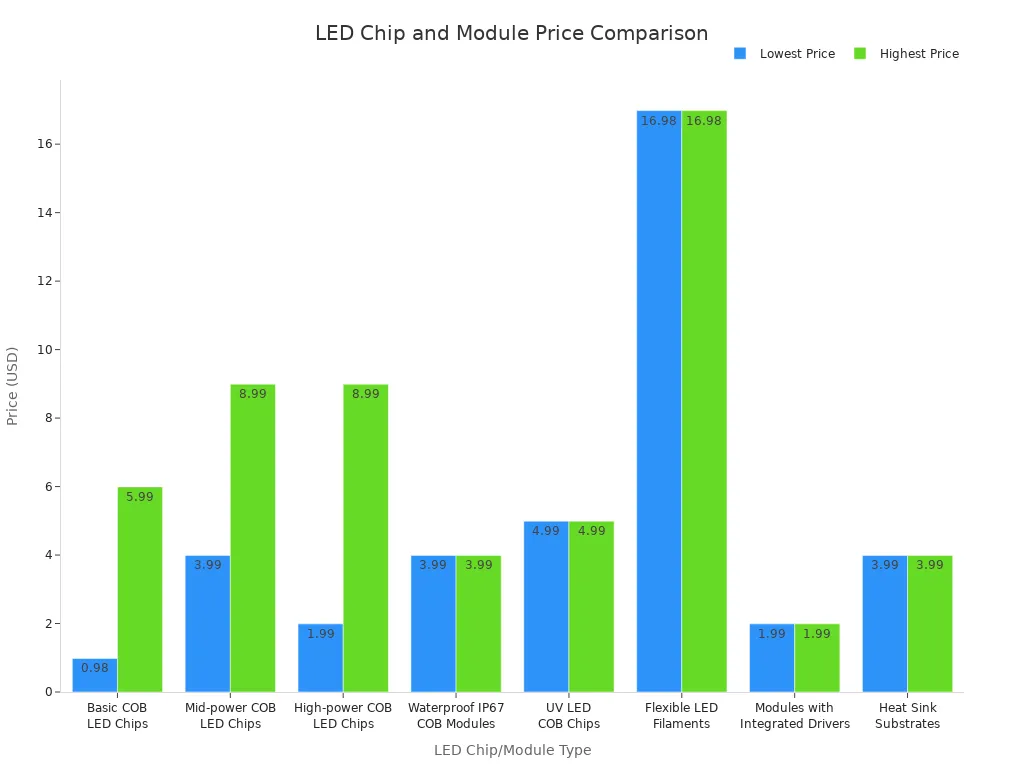
Driverless AC led chips are easy to wire and cost less. But they do not handle power changes well and are hard to dim. Regular modules give you more control and last longer.
Heat Sink & Thermal Paste
Heat sinks made from aluminum or copper pull heat away from the led chips. This stops them from getting too hot and helps them last longer. Thermal paste or glue helps move heat from the led to the heat sink. Big, good heat sinks can help leds last up to 30% longer. Bad heat control makes leds break early and costs more to fix.
Power Supply & Driver
The power supply or driver must match what the led module needs. Driverless AC led chips do not need a driver, so they are good for simple lights like a 20 watt flood light. Regular modules need a driver to work safely and let you dim the light. The right driver keeps
the led safe from power spikes and helps it work well.
Waterproof Enclosure
A waterproof enclosure keeps the led flood light safe from rain, dust, and bumps. Pick enclosures with high IP ratings, like IP65 or higher. These ratings mean the flood light can handle rough weather outside. Using sealants that can take heat and plexiglass covers gives more safety and spreads the light better.
Wiring & Assembly Tools
Good wiring and tools are needed for safety and to make the light last. Use cables that can take heat, heat shrink tubes, and strong bolts. Tools like a drill press, jigsaw, and sandpaper help you put the parts together. Good wiring stops shorts and makes sure the flood light works every time.
Tip: Always ground metal parts and do not tighten bolts too much, so the sealant stays in place.
If you use good parts and build it carefully, your led flood light will last longer, shine brighter, and save energy. Picking the right parts is why some flood lights work better and last longer in hard places.
How to Build a LED Flood Light
You need to plan carefully to build a good LED flood light. Each step is important for making the light work well and last a long time. Knowing why you do each step helps you avoid mistakes and get the most out of your project.
LED Array & Heat Sink
LEDs get hot when they are on. Too much heat can make them break or not last long. A good heat sink with a big surface helps cool them down. For example, a heat sink with about 10 square inches for each watt keeps the light safe, especially for a 20 watt flood light.
The way you place the heat sink fins matters too. If the fins are up and down, hot air can rise and cool the light better. Put a thin layer of thermal paste between the LED array and the heat sink. This fills in any air spaces and helps move heat away. The table below shows the best ways to put LED arrays on heat sinks:
|
Aspect |
Recommendation |
Explanation |
|---|---|---|
|
Heat Sink Surface Area |
Use largest feasible area (~10 in² per watt) |
Improves heat dissipation via convection and radiation |
|
Fin Orientation |
Vertical for natural convection |
Enhances airflow and cooling efficiency |
|
Airflow |
Avoid constricted airflow |
Ensures effective heat transfer |
|
Thermal Interface |
Use thermal paste or pad (0.15–0.30 mm thick) |
Fills gaps, reduces thermal resistance |
|
TIM Selection |
High thermal conductivity, proper thickness |
Optimizes thermal transfer and reliability |
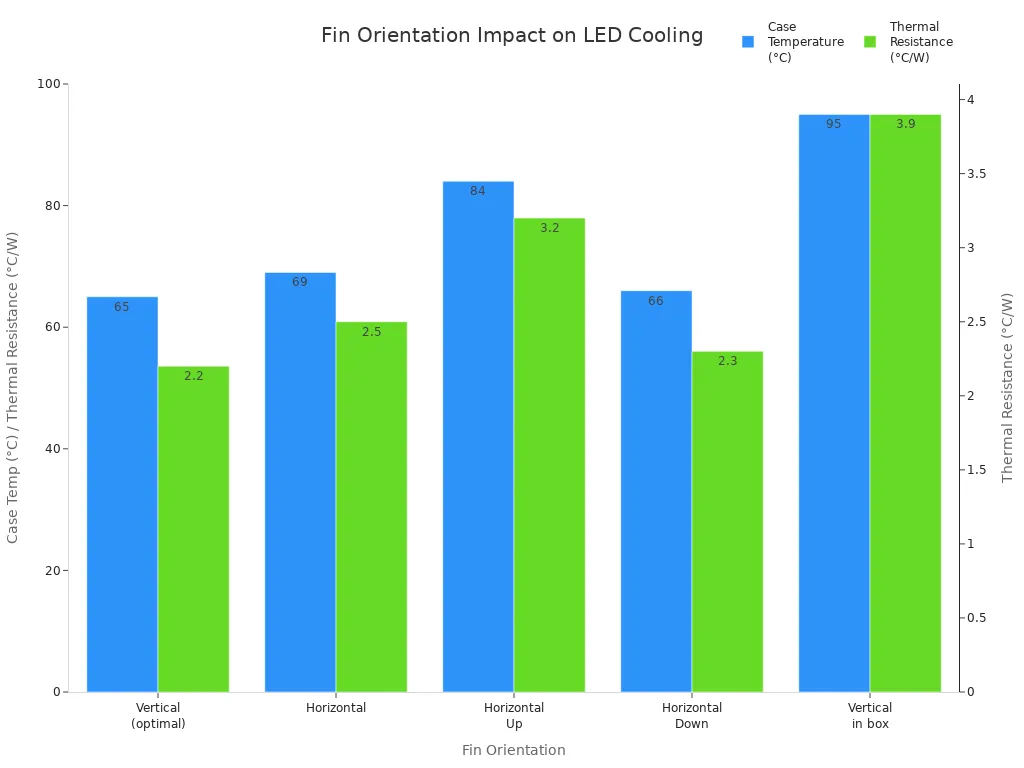
Picking the right heat sink and using thermal paste the right way keeps the LED array cool. This helps the flood light stay bright and last longer.
Mounting LEDs
Mounting the LEDs tightly stops them from moving. This makes sure the light shines the same way every time. The bracket should be fixed to a wall or pole with the right screws and anchors. If the light is loose, it can move, not cover the right area, or get damaged by shaking or weather.
When you put the LED modules on the heat sink, use screws or thermal glue to hold them. Do not tighten too much, or you might break the LED or heat sink. You can change the angle of the flood light to get the best lighting and stop light from going where you do not want it.
Tip: Pick the best spot for your light based on what you need to see and keep safe. Move the light to cover more area and stop glare.
Wiring & Driver Connection
Good wiring is very important for a safe LED flood light. Always turn off the power at the breaker before you start. Use a voltage tester to make sure the power is off. This keeps you safe from getting shocked.
Connect the black (hot), white (neutral), and green or bare (ground) wires together. Use wire nuts and tape to keep the wires tight and safe. For outside lights, use strong wires and good connections. This stops shorts and keeps the light working in bad weather.
Mount the LED driver with the hardware that comes with it. Using loop-in and loop-out cable entry makes wiring easier and neater. After you finish wiring, put covers back on to protect the parts. Use a multimeter to check if the voltage and current are right. Keep the wires neat and write down any changes you make.
Enclosure & Waterproofing
Keeping water and dust out is key for a long-lasting LED flood light. Use a strong enclosure with an IP65 or higher rating to protect the inside parts from rain, snow, and dirt. Silicone gaskets seal the box, and cable glands stop water from getting in through the wires.
To make it even safer, use heat shrink tubing with glue on all wire joins. Put desiccant packets inside to soak up any water and stop fogging. You can also use a silicone coating on the circuit boards, especially if it is very wet where you live.
- Use outdoor cables that do not break in the sun.
- Make drip loops in the cables before they go into the box so water does not run inside.
- Check the box and seals often to keep the light waterproof.
- Note: Good waterproofing helps your flood light last longer, need less fixing, and saves money.
If you follow these steps and know why they matter, you can build a LED flood light that works well anywhere. Good cooling, strong mounting, safe wiring, and waterproofing all help make a tough and bright light.
Safety & DIY Installation
Making a LED flood light at home has many good points, but safety is most important. Knowing why each safety rule matters helps stop injuries and damage.
Electrical Safety
Working with electricity can be risky if you are not careful. Following safety rules keeps you and your things safe.
Always turn off the power at the breaker before you start. Check with a voltage tester to make sure it is off.
- Use tools with rubber handles so you do not get shocked.
- Wear safety glasses, gloves, and strong shoes to stay safe.
- Make sure ladders or platforms are steady. Do not reach too far or carry heavy things when up high.
- Let flood lights cool down before you touch them so you do not get burned.
- If you are not sure or if the law says, ask an electrician to do the wiring.
- Mount the light with strong brackets so it can handle wind and rain.
After you put up the light, test and move the beam to cut down glare and light up the right spot.
The table below shows the main electrical safety steps:
|
Safety Step |
Description |
|---|---|
|
Power Off & Verification |
Always turn off power and check with a tester before you start. |
|
Grounding |
Connect all ground wires and metal parts to stop shocks. |
|
Wire Connections |
Use tight connectors and wrap with tape to keep wires safe. |
|
Weatherproofing |
Seal lights and boxes with silicone to keep water out. |
|
Code Compliance |
Follow local rules and get permits if you need them. |
Handling Components
Handling LED parts the right way stops damage and helps the light last longer. Do not bend LED panels too much or they can break and not last as long. Using hard cases when moving panels keeps them safe from harm. Store panels in cool, dry places to stop rust and glue problems. Put silica gel packs inside to keep water away and stop failures. Always turn off the power before you plug in or unplug cables to stop surges. Clean lenses with a soft cloth and rubbing alcohol to keep them clear and bright.
DIY Installation Tips
A strong and lasting diy flood light starts with good planning. Pick a spot that lights up the area well and does not cause glare.
- Test each light after you put it up to make sure it works.
- Move the light to get the best angle and direction.
- Clean the lenses and light often to keep them bright.
- Check for damage or water leaks and fix them fast.
- Keep seals tight and all wires safe from water.
Turning off the power and using safe tools every time keeps everyone safe. Taking care of your flood light helps it work well for a long time.
Testing & Optimization
Testing LED Flood Lights
Testing a new flood light makes sure it works well and is safe. Builders check each part to see if it works right. They look at the LED driver and compare different brands to find the best one. Turning off pulse-width modulation can help stop electrical noise and make the light more stable. Adding AC input filters and ferrites to power cables also cuts down on noise. Keeping input and output cables apart lowers the chance of problems. Grounding the driver housing helps keep the system safe by lowering unwanted currents.
Thermal shock tests check if the flood light can handle hot and cold. Drop and shake tests make sure it is strong and does not break easily. Rain tests show if the light can stand up to bad weather. Builders also test how bright the light is and how wide it shines to make sure it lights up the right area. Checking for certifications like UL, ETL, DLC, or FCC proves the light is safe and good quality. Special tools check for flicker and other problems to make sure the light meets rules. These tests show why checking everything is important for saving energy and making the light last a long time.
Troubleshooting
Troubleshooting means fixing problems that can happen after building the light. Builders look at the power cord and connections to see if they are broken or loose. If needed, they change out bad parts. They use a multimeter to check if the LED driver gives the right power. If the driver is bad, they put in a new one to fix the light. Looking at the LED chips for dark spots or burn marks helps find broken parts. Cleaning the heat sink gets rid of dust and helps keep the light cool. Checking seals and gaskets for water damage stops rust and keeps water out. After fixing things, they put the light back together and test it to make sure it works.
Some common problems are flickering, dim light, or the light not lasting long. Builders fix these by checking wires, changing old bulbs, and making sure air can flow around the light. If the light gets too hot, putting it in a place with more air helps. If water gets in, they seal it better and use parts that do not rust. These steps show why checking and fixing the light often keeps it working well.
DIY Dimmable LED Flood Light
Making a diy dimmable led flood light lets people change how bright it is and save power. The LED chips, drivers, and dimmers must work together to stop flickering and other problems. TRIAC dimmers are easy to use, while 0-10V dimming gives more control for big spaces. PWM dimming lets you change the light smoothly without flicker, which is good for places where people are sensitive to light changes. Picking the right dimmer depends on where you use the light and what you need.
Keeping the light cool is still very important, so builders use good heat sinks and materials that move heat away fast. Strong cases made from aluminum or polycarbonate keep the light safe from rust and bumps, so it works well outside. Sealed cases and special coatings help keep out water and dirt. Adding controls like remotes or wall switches makes the light easier to use. Testing how well the dimmer works, checking for flicker, and making sure the light saves energy helps builders know the light is good. These steps show why making the light easy to use and energy-saving gives better results.
Tip: Clean and check your diy dimmable led flood light often to keep it bright and make it last longer.
References
- LM-80, LM-79, ISTMT, and IES Test Reports
- EN61000-3-2, EN61000-3-3 Compliance Standards
- UL, ETL, DLC, FCC Certification Guidelines
Making a LED flood light lets you control each step, like putting it together and testing it. You get a bright light that saves energy and works for a long time. Many people pick LED flood lights because they are simple to set up and help the planet:
They use up to 80% less energy than old lights.
- LEDs last longer, so you throw away less and change bulbs less often.
- They do not get very hot and are tough, so they are safe and good for the earth.
Trying out new ways to build them can save money and feels rewarding. When you share what you learn, you help others do better with their own lights.
FAQ
Why does a LED flood light need a heat sink?
A heat sink takes heat away from the LED chips. This cooling helps the flood light last longer. It also keeps the light bright. If there is no heat sink, the LED can get too hot. Then it might break early.
Why choose a waterproof enclosure for outdoor LED flood lights?
A waterproof enclosure keeps water and dust out. It protects the light from rain and dirt. This keeps the electrical parts safe. It stops short circuits from happening. Lights with high IP ratings work well in bad weather.
Why do LED flood lights save more energy than traditional lights?
LED flood lights use much less energy than old bulbs. They turn more power into light, not heat. This helps lower electricity bills. It also means you do not have to change bulbs often.
Why test a DIY LED flood light before installation?
Testing makes sure all parts work right. It checks if the wiring is safe. Builders can find problems early, like flickering or dim light. This stops failures after you put up the light. It also makes sure the flood light is safe.
Why do some LED flood lights flicker or dim unexpectedly?
Flickering can happen if the driver does not match the LED module. Bad wiring or cheap parts can also make the light dim. Using the right driver and tight connections helps stop these problems.
Tip: Always use a multimeter to check voltage and current before you finish installing.
|
Reference |
Description |
|---|---|
|
DOE SSL Program |
U.S. Department of Energy, Solid-State Lighting |
|
LM-80 Testing |
LED lumen maintenance testing method |
|
IP Ratings Guide |
International Electrotechnical Commission, IP Codes |
Send Inquiry