


led ceiling light panels
Oct 14, 2025
Leave a message
How to Choose LED Ceiling Light Panels That Actually Fit Your Space
LED ceiling light panels have become standard in offices, retail stores, warehouses, and homes. But picking the right ones involves more than just grabbing the cheapest option. You need to understand brightness levels, color temperature, installation requirements, and whether they'll work with your existing setup.
This guide walks you through everything about LED ceiling light panels-from basic specs to installation considerations to long-term costs. Whether you're renovating a small office or upgrading an entire facility, you'll find practical answers here.
What Are LED Ceiling Light Panels?

LED ceiling light panels are flat, rectangular lighting fixtures that mount directly into drop ceilings or onto hard ceilings. Unlike traditional fluorescent panels they replace, LED panels use light-emitting diodes to produce light more efficiently.
The basic structure includes an LED array (the actual diodes), a diffuser layer (spreads light evenly), a driver (converts power), and a frame. They come in standard sizes: 2x2 feet, 2x4 feet, and 1x4 feet are most common. You'll also find rectangular panels for various custom applications.
The main appeal is simple: LED panels consume 40-50% less energy than fluorescent alternatives, last 50,000+ hours (versus 15,000-20,000 for fluorescent), and don't contain mercury. They also generate less heat, which matters if you're cooling a space.
The Five Key Specs You Need to Understand
Lumens and Brightness Levels
Lumens measure light output, not power consumption. A typical 2x4 LED ceiling panel produces 3,500-4,500 lumens. For office work, you generally want 30-50 foot-candles (which translates to 300-500 lumens per square meter). Task-intensive areas need more; storage areas need less.
Don't just compare wattage between brands. A 40-watt LED panel from one manufacturer might produce different lumens than a 40-watt panel from another. Check the spec sheet for actual lumen output.
Color Temperature
Color temperature is measured in Kelvin (K). Cool white (4000-4100K) mimics daylight and works well in offices and retail spaces because it helps people stay alert. Warm white (2700-3000K) creates a cozier feel, better for restaurants, hotels, or living areas.
Natural white (3500K) sits in the middle. The difference matters more than people think-wrong color temperature in an office can affect mood and productivity, even if brightness is adequate.
CRI and Light Quality
Color Rendering Index (CRI) measures how accurately colors appear under the light. A score of 90+ means colors look natural. Most quality LED ceiling panels have CRI of 80-95. This matters if you're selling retail goods or working with detailed colors. A low CRI panel makes reds look dull or skin tones look off.
Dimming Capability
Not all LED panels dim smoothly. Some only work with specific dimmer types (0-10V, DALI, or phase-cut). If you need dimming, verify the panel's compatibility with your control system before buying. Cheap panels often can't dim at all.
Lifespan and Warranty
LED panels last 40,000-70,000 hours depending on quality and heat management. That's roughly 10-15 years of typical use. Warranties usually cover 5 years, sometimes 10 years for premium brands. Check what's covered-some warranties exclude normal wear but cover defects.
Step-by-Step Guide to Installing LED Ceiling Light Panels
Step 1: Measure and Plan Your Layout
Start by measuring your ceiling height and room dimensions. Standard drop ceilings are 9-10 feet high and accommodate 2x2 or 2x4 panels easily. For hard ceilings, you'll need surface-mount brackets instead of drop-in frames.
Calculate lumens needed based on room size and use. A 200-square-foot office needs roughly 2,000-4,000 lumens total, spread across multiple panels. Use online calculators from manufacturers as a starting point-they'll give you ballpark figures based on room type.
Mark where panels will go, making sure placement allows access to wiring and doesn't create dark spots. Staggered layouts look better than straight grids, especially in large spaces.
Step 2: Choose Installation Type
Drop-in panels (for drop ceilings) are easiest-they literally drop into the existing frame. You'll need wiring run to the location, but no structural changes.
Surface-mount panels screw directly to a hard ceiling or soffit. They're more visible (people see the frame and wiring) but work anywhere. Semi-recessed panels mount partially into a ceiling cavity, offering a middle-ground appearance.
If you're replacing fluorescent panels in an existing drop ceiling, most LED panels use the same mounting frame. Electrical connections are usually straightforward-basic wiring knowledge handles them.
Step 3: Handle Electrical Connections
LED ceiling panels need power, which must come from your electrical system. If you're replacing fluorescent ballasts, you might reuse existing wiring. If you're adding new panels, hire a licensed electrician.
Most panels run on standard 120-240V power (depending on region and panel type). Panels draw 30-80 watts each, so existing circuits often handle multiple panels without upgrades.
Emergency backup options exist-battery backup modules add 2-4 hours of runtime during outages. They're optional but worth considering for critical areas like emergency exits or data centers.
Step 4: Install and Test
Follow manufacturer instructions exactly. Drop-in installation usually takes 15-30 minutes per panel (excluding electrical work). Someone needs to support the panel while another person secures it.
After installation, test brightness, color consistency, dimming (if applicable), and for any humming or flickering. A properly installed LED ceiling panel should be silent and show no visible flicker.
Step 5: Set Up Maintenance
LED panels rarely need maintenance, but dust buildup reduces brightness by 10-20% over time. Clean diffusers annually with a soft brush or damp cloth. Check electrical connections yearly if your facility has temperature swings.
Keep warranty documentation and serial numbers. If a panel fails, replacements usually arrive within a week through manufacturer or authorized distributors.
Real-World Application: Office and Retail Environments
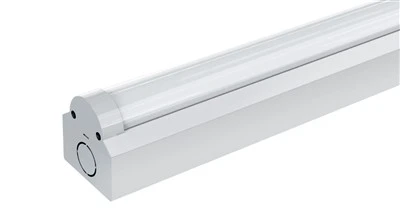
Offices and Open Workspaces
Most offices use 2x4 LED ceiling panels with 4000K color temperature and 90+ CRI. The brightness fits standard 9-foot ceilings well-people don't report eye strain or headaches like they sometimes did with older fluorescent panels. A typical 5,000-square-foot open office needs 15-20 panels, costing $3,000-$6,000 installed.
One Boston accounting firm replaced 48 fluorescent panels with LED panels in 2023. Electricity bills dropped 35%, and staff reported better focus. The payback period was roughly three years, after which savings accumulated as pure profit.
Retail Stores
Retail environments benefit from 4100K color temperature and high CRI (93-95) to make merchandise look appealing. Grocery stores use slightly higher lumens than clothing stores-fresh produce and meat need more light to look appetizing.
A 10,000-square-foot retail space typically requires 30-40 LED panels. Because retail spaces run 12-16 hours daily (versus offices at 8-10 hours), LED panels reach payback faster-often within 2-2.5 years.
Warehouses and Industrial Spaces
Warehouses need brightness but care less about color rendering. High-bay LED panels (often rectangular, 4000K) are standard. A 50,000-square-foot warehouse might use 60-80 panels to achieve adequate task lighting.
Heat becomes important in warehouses. Panels that dissipate heat poorly will fail faster in hot environments. Select panels with aluminum heat sinks and verify thermal management specs.
Common Mistakes When Choosing LED Ceiling Light Panels

Confusing Wattage with Brightness
Your biggest mistake will be comparing wattage instead of lumens. A 50-watt panel from Brand A might produce 4,000 lumens, while a 50-watt panel from Brand B produces 3,200 lumens. You're not buying watts-you're buying light.
Always compare lumen output between panels of similar size and color temperature. Wattage only matters for calculating electrical load and energy costs.
Picking the Wrong Color Temperature
Buying 2700K warm white panels for an office creates a dim, sleepy environment. People feel less alert and productive. The opposite happens in restaurants-4100K cool white feels clinical instead of welcoming.
Know your space's purpose before buying. Offices need 3500-4100K. Hospitality (restaurants, hotels) needs 2700-3000K. Retail benefits from 4000-4100K. Educational spaces work best with 4000-4100K.
Ignoring Installation Complexity
Some panels require specific electrical configurations or dimming systems you don't have. Others need custom mounting brackets for your ceiling type. Assuming "all LED panels install the same way" leads to costly surprises.
Before purchasing, check compatibility with your existing infrastructure-electrical service, ceiling type, control systems, and dimming requirements.
Skipping CRI When It Matters
CRI under 80 makes colors look inaccurate. This barely matters in warehouses or basements, but it's critical in retail, photography studios, art galleries, or anywhere color perception affects the customer experience.
Don't overpay for 95+ CRI in spaces where it doesn't matter. Do invest in high CRI (90+) wherever color accuracy influences revenue or user experience.
Overlooking Thermal Management
Cheap LED panels have poor heat dissipation. They run hotter, age faster, and fail within 3-5 years instead of 10-15 years. The price difference is usually small (10-20%), but the lifespan difference is dramatic.
Check thermal management specs. Panels with aluminum heat sinks or active cooling last longer. Pay attention to operating temperature ranges-panels rated only to 25°C will degrade faster in hot environments.
Comparing LED Ceiling Light Panels: Specifications That Matter
| Specification | Budget Panel | Mid-Range Panel | Premium Panel |
|---|---|---|---|
| Lumens (2x4) | 3,000-3,500 | 4,000-4,500 | 4,500-5,000 |
| Wattage (2x4) | 55-65W | 40-50W | 35-45W |
| CRI | 70-80 | 85-90 | 90-95 |
| Color Temp Options | 2-3 | 3-4 | 4-5 |
| Dimming | None or basic | 0-10V standard | Multiple options |
| Lifespan | 30,000 hours | 50,000 hours | 70,000 hours |
| Warranty | 2-3 years | 5 years | 10 years |
| Typical 2x4 Cost | $80-120 | $120-200 | $200-300 |
Budget panels cost less upfront but fail faster and consume more power. Premium panels cost more but last longer and save money through efficiency over their lifespan. Mid-range panels offer solid balance for most applications.
Cost Breakdown: What LED Ceiling Light Panels Actually Cost
Hardware and Panel Costs
A quality 2x4 LED ceiling panel costs $120-250 depending on specifications. A 2x2 panel runs $100-180. If you're replacing fluorescent panels, you might reuse existing frames, reducing costs.
For a typical small office (1,500 square feet, 12 panels), budget $1,500-$3,000 for panels alone. A medium office (5,000 square feet, 35-40 panels) costs $4,500-$10,000. Large facilities (20,000+ square feet) might spend $20,000-$50,000 but get volume discounts.
Installation Labor
If you're experienced with electrical work and drop ceilings, self-installation saves $500-$1,500. Most people hire electricians ($50-150 per hour in most US markets). A small office installation takes 8-16 hours, costing $800-$2,400 in labor.
If you're replacing fluorescent panels, labor costs drop because wiring already exists. You're mostly swapping fixtures. If you're adding entirely new lighting, costs increase.
Electrical Upgrades
Most existing electrical systems handle LED panels without upgrades. A typical panel draws 40-60 watts; your circuit can handle 15-20 amps (1,800-2,400 watts capacity), leaving room for multiple panels.
If you're adding 20+ panels or your electrical service is old, you might need breaker upgrades ($300-800) or new circuits ($200-500 per circuit). Get an electrician's assessment-it often costs nothing upfront and takes 15 minutes.
Maintenance and Operating Costs
LED panels run roughly $5-15 per panel annually in electricity (compared to $15-30 for fluorescent). Over 10 years, per-panel savings reach $100-150 in electricity alone.
Maintenance costs are minimal-occasional cleaning and rare repairs. Budget $200-400 annually for a large facility, mostly for replacement panels if failures occur (though quality panels rarely fail early).
Payback Period and ROI Calculation
To calculate your payback period:
Add total hardware and installation costs (let's say $5,000 for a small office upgrade)
Calculate annual energy savings (replacing fluorescent saves roughly $50-100 per panel annually)
Divide total cost by annual savings
For a small office spending $5,000 on 12 panels:
Annual energy savings: 12 panels × $75 per panel = $900
Payback period: $5,000 ÷ $900 = 5.5 years
After payback, you're purely saving money until panels need replacement (10-15+ years away). Many businesses see cumulative savings of $10,000-$30,000 over the panels' lifetime, depending on size and electricity rates.
Higher electricity rates (California, New England) shorten payback to 3-4 years. Lower rates (Texas, Oklahoma) extend it to 6-7 years. Factor in your local rate-higher rates make LED more attractive financially.
Maintenance and Troubleshooting LED Ceiling Light Panels
Why Panels Lose Brightness Over Time
LED panels don't burn out suddenly like incandescent bulbs. Instead, light output degrades gradually-dropping 5-10% after 50,000 hours. Dust and dirt accelerate this process by blocking light from reaching you.
Clean panels annually with a soft brush or slightly damp microfiber cloth. Avoid harsh chemicals or abrasive materials. A 10-minute cleaning session restores 10-15% of lost brightness on dusty panels.
Flickering and Humming Issues
Flickering usually indicates a dimmer incompatibility or failing driver. If your panel flickers with a standard on/off switch (not dimmed), contact the manufacturer-it's likely defective.
Humming typically comes from the driver converting AC power. A quiet hum is normal. Loud humming suggests an overheating driver or electrical issue. Turn the panel off and have an electrician inspect.
Color Shifts and Inconsistency
Multiple panels showing different color temperatures is rare with quality brands but happens with budget panels. It usually indicates manufacturing variation, not a defect.
If one panel looks different, it might be failing internally. LED degradation doesn't always cause brightness loss first-sometimes color temperature shifts. New panels under 5-year warranty can be replaced.
What Temperature Does to Panel Lifespan
LED panels operate best between 60-80°F. For every 10°C above that, lifespan cuts roughly in half. A panel in a hot attic (130°F) will fail much faster than one in a climate-controlled office.
In hot environments, select panels with robust heat management. Don't install budget panels in uninsulated spaces, crawlspaces, or near heat sources.
Frequently Asked Questions About LED Ceiling Light Panels
How much does it cost to replace all my ceiling lights with LED panels?
Total cost depends on space size and ceiling type. A typical small office (1,500 sq ft) costs $2,500-$5,000 installed. A 5,000-square-foot office runs $5,000-$12,000. Large facilities can exceed $50,000, but they get volume discounts from suppliers. Always get quotes from local contractors-labor varies significantly by region.
How long does it take to install LED ceiling light panels?
Professional installation of 12 panels takes 4-8 hours (roughly 30-40 minutes per panel including electrical work). If you're replacing existing fixtures and reusing wiring, it's on the faster end. Adding new circuits or upgrading electrical service adds 2-4 hours. DIY installation saves time but requires electrical knowledge-mistakes create safety hazards.
Can I install LED ceiling light panels myself?
If you have drop ceilings and existing wiring, yes-the panels themselves drop in easily. Electrical connections are straightforward for someone comfortable with basic wiring. Hire a professional if you're unsure about electrical work or unfamiliar with your local building codes. Safety and code compliance matter more than saving a few hours of labor.
Do LED ceiling light panels save money on electricity?
Yes. LED panels use 40-50% less electricity than fluorescent panels they replace. On a $100 monthly electrical bill, you might save $40-50 monthly on lighting alone. Over 10 years, that's $4,800-$6,000 in savings before accounting for maintenance and replacement costs.
What's the difference between 2x2 and 2x4 LED panels?
A 2x4 panel produces roughly twice the light output of a 2x2 panel (typically 4,000 lumens vs 2,000 lumens). Choose based on ceiling grid size and light coverage needs. Most offices use 2x4 panels because they space farther apart while maintaining even illumination. 2x2 panels work where tighter spacing is needed or in smaller rooms.
How long do LED ceiling light panels last?
Quality panels last 50,000-70,000 hours, roughly 10-15 years of typical use (8-10 hours daily). Budget panels might last only 30,000-40,000 hours (5-8 years). Premium panels occasionally exceed 80,000 hours (15-20 years). The lifespan assumes proper installation, adequate heat dissipation, and no electrical surges or failures.
Are LED panels warmer than fluorescent panels?
No, but they can be warmer if you choose warm white (2700K) instead of cool white. LED panels come in various color temperatures. Swap to 2700K warm white panels, and they'll feel warmer than the cool white fluorescent panels they replace. Warm white costs the same as cool white-it's just a preference choice.
Can I dim LED ceiling light panels?
Only if the panels support dimming and your electrical system includes compatible dimming controls (0-10V or DALI). Not all LED panels dim smoothly or at all. Cheap panels often can't dim. If dimming matters to you, verify it before purchasing. Dimming-compatible panels usually cost $20-40 more per unit.
Summary and Your Next Steps
LED ceiling light panels make sense for most spaces where you're replacing aging fluorescent systems. They cost less to operate, last longer, and create better lighting quality. The upfront investment pays back in 3-7 years depending on energy costs and facility size.
Before buying, understand your space's needs: brightness requirements, color temperature preference, ceiling type, and budget. Compare lumens and CRI, not just wattage and price. Get multiple quotes from installers. Calculate your specific payback period based on local electricity rates.
If you're upgrading a small office, expect $2,500-$5,000 total. For larger facilities, budget increases proportionally but per-panel costs drop with volume. Start with a pilot installation in one area if you're uncertain, then expand once you see results.
The LED ceiling panel market offers solid options across all price points. Avoid the cheapest panels-they fail prematurely and create false savings. Mid-range panels deliver reliability and value for most applications. Invest in premium only where color accuracy or extended lifespan justifies the extra cost.
Send Inquiry